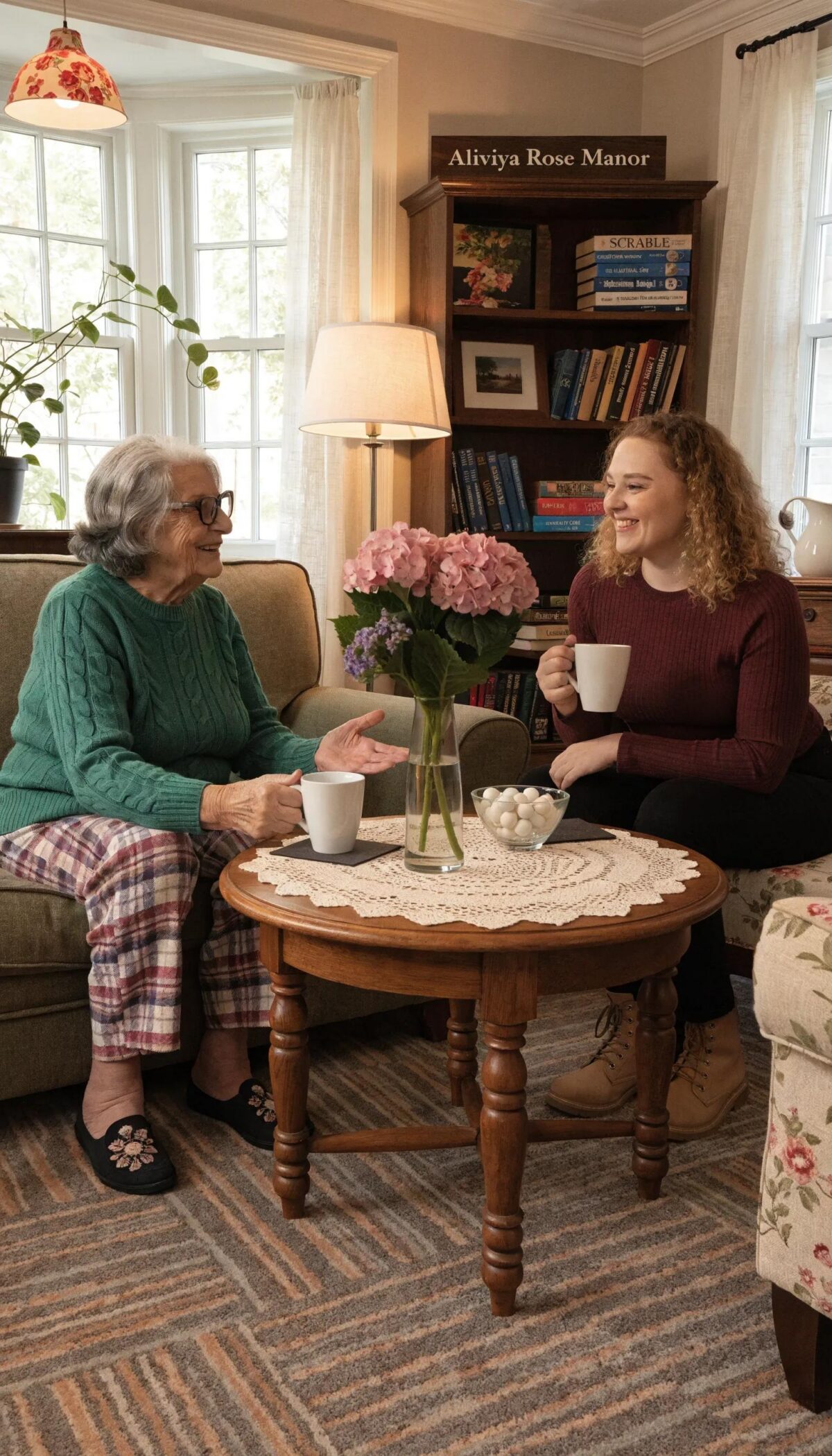
Aliviya Rose Manor

What Families Should Ask on an Assisted Living Tour: A Nurse’s Guide

Choosing assisted living for a parent or spouse is one of the hardest decisions a family will make. As a registered nurse who has spent years caring for older adults, I want to help you walk into every tour with clear eyes and the right questions. This is not about finding the fanciest building. It is about finding a place where your loved one will be safe, known by name, and treated with dignity.

Before You Schedule the Tour

Call ahead and ask about the home’s license number and current AHCA inspection record. In Florida, every assisted living facility must be licensed by the Agency for Health Care Administration. You can look up any home’s inspection history on the AHCA website. A home with nothing to hide will give you their license number on the phone without hesitation.

Ask who owns the home and who runs it day to day. Family-owned homes and small group homes often feel different from large corporate facilities, and the difference shows up in how decisions get made when something goes wrong at 2 a.m.

Questions to Ask About Care

  • What is the staff-to-resident ratio during the day, evening, and overnight?
  • Is there a registered nurse on site or on call? How quickly can they respond?
  • How does the home handle a fall, a fever, or a sudden change in behavior?
  • What happens if my loved one’s needs increase? Do they have to move out?
  • How are medications stored, administered, and documented?
  • Who coordinates with the resident’s primary care doctor and specialists?

The answers should be specific. If you hear vague language like “we have great staff” without details, push back gently and ask for numbers.

Questions to Ask About Daily Life

  • Walk me through a typical day. What time do residents wake up, eat, and go to bed?
  • Can my loved one keep their own schedule, or is everything on a fixed timetable?
  • What activities happen this week? Can I see the calendar?
  • How do you handle residents who prefer to stay in their room?
  • Are family members welcome to visit, share meals, or take their loved one out?
  • How do you celebrate birthdays, holidays, and personal milestones?

Questions to Ask About the Home Itself

  • May I see a resident room that is currently occupied, with permission, or one set up the way residents actually live?
  • How are the bathrooms set up for safety? Grab bars, shower seats, call buttons?
  • Is the outdoor space accessible to residents with walkers or wheelchairs?
  • What does the home smell like? Trust your nose. Persistent odors signal problems.
  • Are residents up, dressed, and engaged, or are most of them parked in front of a television?

Questions to Ask About Cost

  • What is included in the monthly rate, and what costs extra?
  • How often do rates increase, and by how much in the past three years?
  • Do you accept long-term care insurance, VA Aid and Attendance, or Medicaid waivers?
  • What is the deposit, and what is your refund policy if my loved one passes away or moves out?
  • Is there a notice period for ending the contract?

Red Flags to Watch For

Trust your instincts. If something feels off, it usually is. Watch for:

  • Staff who avoid eye contact with residents or speak about them as if they are not there
  • Residents in soiled clothing or unkempt hair during a scheduled tour
  • Locked doors with no clear emergency egress
  • A tour guide who only shows you the lobby and dining room
  • Reluctance to answer questions about staffing, license, or inspections
  • Pressure to sign on the spot or pay a large deposit before you are ready

Bring Someone With You

Two sets of eyes catch more than one. Bring a sibling, an adult child, or a trusted friend. Take notes during the tour and compare impressions afterward. Visit at different times of day if you can, including a meal time and a weekend.

The Question Most Families Forget

Ask the administrator or owner this directly: “If this were your own mother or father, would you place them here?” Watch their face when they answer. The honest answer, even with hesitation, tells you more than a polished sales pitch ever will.

About Aliviya Rose Manor

Aliviya Rose Manor is a small, eight-bed assisted living home in Spring Hill, Florida. We are RN-owned and veteran-operated, set on roughly three acres in a quiet residential neighborhood. Our administrator, Wendy Schabilion, is a registered nurse with decades of experience caring for older adults. We license under AHCA #11884 and welcome families to tour any day from 9 a.m. to 7 p.m.

If you would like to visit, call 352-691-9136 or email office@aliviyarosemanor.com. We will answer your questions honestly, even if our home is not the right fit for your family.

Levels of Assisted Living for Seniors

Learn how levels of assisted living for seniors work, what care each level includes, and how families can choose the right support with confidence.

What Is Assisted Living for Seniors?

What is assisted living for seniors? Learn what it includes, who it helps, costs, and how to tell when a loved one may need daily support.

Are cameras allowed in assisted living facilities?

Cameras in assisted living facilities are a topic that is hotly debated. Some say that cameras are an invasion of privacy and do not allow residents to live their lives with dignity. Others argue that cameras are necessary to protect residents from abuse and neglect. So, what is the answer? Are cameras allowed in assisted living facilities? The answer may surprise you.

Are cameras allowed in assisted living Facilities

Are cameras allowed in assisted living facilities?

Facilities may have policies regarding cameras in common areas

Most assisted living facilities have policies in place regarding cameras in common areas. Typically, these policies prohibit the use of cameras in common areas without the expressed consent of all individuals who may be captured on camera. This is to ensure the privacy and dignity of all residents. In some cases, facilities may make an exception for security purposes. If you are unsure about the policy at your facility, be sure to ask a staff member.

Residents generally have a right to privacy in their rooms

Residents generally have a right to privacy in their rooms. Although staff may enter a resident’s room for various reasons, they should always knock first and announce their presence. In general, residents should be free to entertain visitors in their rooms without staff being present, unless there are legitimate safety or security concerns.

Cameras can also help provide peace of mind for families and loved ones

When it comes to the safety and well-being of our loved ones, we all want peace of mind. And while assisted living facilities do their best to provide a safe and comfortable environment for residents, families can still worry about what goes on behind closed doors.

Fortunately, many assisted living facilities now allow families to install cameras in their loved ones’ rooms. This way, families can check in on their loved ones anytime, anywhere, and see for themselves that they’re being well cared for.

Not only does this give families peace of mind, but it also helps hold assisted living staff accountable for their actions. If there are ever any concerns about the care your loved one is receiving, you can review the footage to get a better idea of what’s going on.

So if you’re considering an assisted living facility for your loved one, be sure to ask about their policy on camera installation. It could make all the difference in giving you the peace of mind you need.

Cameras in assisted living facilities can help promote transparency and accountability.

Are cameras allowed in assisted living facilities?

When it comes to assisted living facilities, there are a lot of questions surrounding what is and isn’t allowed. One of the main questions we get asked is whether or not cameras are allowed in assisted living facilities. The answer to this question is a bit complicated and depends on the state in which the assisted living facility is located. In signings, cameras are allowed with the expressed consent of all parties being recorded. However, in other states, the use of cameras is prohibited. To help you understand the answer to this question, we’ve put together a blog post exploring the topic of cameras in assisted living facilities. Read on to learn more about the laws surrounding this issue and how they may impact your decision to move into an assisted living facility.

Ask the facility management – they may have a policy in place about cameras.

Assisted living facilities typically have a policy in place regarding the use of cameras. However, it is always best to check with the facility management to see if there are any restrictions in place. They may have specific guidelines about where cameras can be used and how they can be used.

Cameras can also help provide peace of mind for families and loved ones

While the answer to whether or not cameras are allowed in assisted living facilities may vary from state to state and facility to facility, many families and loved ones find that having a camera in their elderly relative’s room provides them with a sense of peace of mind. This is especially true for those who live far away from their loved ones and are unable to visit as often as they would like.

Many families choose to install hidden cameras in their loved one’s rooms so that they can check in on them without them knowing. This way, they can make sure that their loved one is being treated well and that they are getting the care they need. While some people may see this as intrusive, most families feel that it is worth it if it means that their loved one is safe and happy.

Cameras in assisted living facilities can help promote transparency and accountability

The use of cameras in assisted living facilities can help promote transparency and accountability within the facility. Cameras can help to document activities that take place within the facility, providing a record of what occurred. This can help ensure that residents are receiving the care that they need and deserve. Additionally, cameras can help to deter the abuse and mistreatment of residents. If the staff knows that their actions are being recorded, they may be less likely to engage in abusive or neglectful behavior.

Ultimately, the decision of whether or not to allow cameras in an assisted living facility is up to the residents and their families

The decision of whether or not to allow cameras in an assisted living facility is ultimately up to the residents and their families. Some residents may feel comfortable with having a camera in their room, while others may prefer not to have one. Families should discuss the pros and cons of allowing a camera in an assisted living facility before making a decision.

Some pros of allowing a camera in an assisted living facility include:

• Increased security for residents

• The ability for family members to check in on their loved ones

• Potentially improved care for residents

Some cons of allowing a camera in an assisted living facility include:

• The potential for invasion of privacy

• The possibility that footage could be used against residents

• The risk of hackers gaining access to the footage


Is assisted living tax deductible? ( Find Out!)

The cost of assisted living can be a big financial burden for families, but there may be some relief in the form of taxes. Assisted living expenses are tax deductible if they meet certain criteria set by the IRS. To deduct assisted living expenses, you must be able to itemize your deductions on your federal income tax return. If you’re able to itemize, you can then deduct qualified medical expenses that exceed 7.5% of your adjusted gross income.

Is assisted living tax deductible?

Assisted living expenses generally qualify as medical expenses if they’re considered necessary to treat a medical condition or illness. Keep in mind that even if your assisted living expenses are tax deductible, you may still have to pay taxes on any income you receive from the facility. For example, if you live in an assisted living facility that provides meals and housekeeping services, any money you pay for those services would be considered taxable income. If you’re considering moving into an assisted living facility, be sure to talk to a tax advisor to see if your expenses would be tax deductible.

Many people are surprised to learn that assisted living expenses are tax deductible:

Many people are surprised to learn that assisted living expenses are tax deductible. While the cost of assisted living is not typically covered by health insurance, it may be possible to deduct some or all of the costs on your income taxes.

To deduct assisted living expenses, you must itemize your deductions on Schedule A of your federal income tax return. The costs must be considered medical expenses, which include preventive, diagnostic, therapeutic, rehabilitative, maintenance, and personal care services that are prescribed by a licensed health care professional. The costs must also exceed 7.5% of your adjusted gross income (AGI).

If you or your spouse require assisted living due to a physical or mental condition, the expenses may be deducted as medical expenses. This includes expenses for room and board, as well as any additional services that are required due to the condition. For example, if you need special equipment or supplies due to a disability, those costs may be deductible.

If you have questions about whether your assisted living expenses are tax deductible, you should speak with a tax advisor or accountant.

Is assisted living Tax deductible

Assisted living is a type of senior care that can provide help with activities of daily living, such as bathing, dressing, and eating:

Assisted living is a type of senior care that can provide help with activities of daily living, such as bathing, dressing, and eating. It can also offer assistance with medication management, transportation, and other services.

Many people choose assisted living because it allows them to remain independent while still getting the help they need. It can be a good option for people who don’t want to move into a nursing home or live alone.

Assisted living is usually not covered by Medicare or Medicaid, so it’s important to check with your insurance provider to see if it will cover any of the costs. Some states have programs that can help pay for assisted living, so be sure to check with your state’s Department of Health and Human Services.

To deduct assisted living expenses, you must itemize your deductions on your tax return:

Assuming that the assisted living facility is your primary residence, you can deduct a portion of your assisted living expenses if you itemize your deductions on your tax return. The Internal Revenue Service (IRS) allows a deduction for certain medical expenses that exceed 7.5% of your adjusted gross income (AGI).

To calculate your deduction, first determine your AGI. Then, add up all of your qualifying medical expenses for the year. You can include the costs of doctors, dentists, prescriptions, surgeries, and other treatment. If your total medical expenses exceed 7.5% of your AGI, you can deduct the amount that exceeds that percentage.

The IRS allows you to deduct medical expenses that exceed 7.5% of your adjusted gross income (AGI):

If you or a loved one are considering assisted living, you may be wondering if the costs are tax deductible. The Internal Revenue Service (IRS) allows you to deduct medical expenses that exceed 7.5% of your adjusted gross income (AGI). This means that if your AGI is $100,000, you can deduct medical expenses that exceed $7,500.

To qualify for this deduction, you must itemize your deductions on Schedule A of your federal tax return. In addition, the medical expenses must be for the diagnosis, cure, mitigation, treatment, or prevention of disease or for the purpose of affecting any structure or function of the body.

Assisted living costs can vary widely depending on the location and type of facility. However, typical costs can range from $2,000 to $5,000 per month. Therefore, it’s possible that a significant portion of your assisted living expenses could be tax deductible.

If you have questions about whether your assisted living expenses are tax deductible, we recommend consulting with a tax professional.

Be sure to keep good records of your expenses, including receipts, invoices, and canceled checks:

Assuming you are referring to medical expenses:

The IRS allows you to deduct certain medical expenses on your federal income tax return. To do so, you’ll need to itemize your deductions using Schedule A. This means your total itemized deductions must exceed the standard deduction, which is $12,200 for taxpayers who are single or married filing separately, $24,400 for those who are married filing jointly, and $18,350 for heads of household.

There are two types of medical expenses that you can deduct: preventive care and necessary treatments.
Preventive care includes things like annual physicals, vaccinations, and screenings. These are considered preventive because they help you avoid getting sick or injured in the first place.

Necessary treatments include things like surgeries, hospital stays, and prescriptions. These are considered necessary because they treat an existing illness or injury.
You can deduct medical expenses that you paid for yourself, your spouse, and your dependent children. You can also deduct medical expenses that you paid for someone who would have been your dependent if they hadn’t been over the age of 19 or a full-time student over the age of 24.

To deduct medical expenses from your taxes, you’ll need to keep good records of what you’ve paid throughout the year. Be sure to save any receipts, invoices, or canceled checks that show what you’ve paid for preventive care and necessary treatments.


Assisted living facilities in Spring hill Florida

For seniors who are looking for an assisted living facility in Florida, there are many options available. In this blog post, we will take a look at some of the top assisted living facilities in Spring Hill, Florida. There are many factors to consider when choosing an assisted living facility, such as the type of care that is provided, the cost of care, and the location of the facility. With so many options available, it can be difficult to know where to start.

Fortunately, this blog post will provide you with all the information you need to make an informed decision about which assisted living facility is right for you. We will take a look at the type of care that each facility provides, the cost of care, and the location of each facility. By the end of this blog post, you will have all the information you need to choose an assisted living facility in Florida that meets your needs and budget.

Assisted living facilities in Spring hill Florida

How Does a Facility for Assisted Living Operate?

The majority of assisted living facilities provide special care for senior citizens who need assistance with daily activities but do not need round-the-clock nursing home supervision. These healthcare organizations frequently give access to medical care in addition to personal care services, social and recreational activities, and other amenities.

Residential care facility residents usually have their own private rooms or apartments and are allowed to come and go whenever they choose. Staff members are on hand to aid with personal care activities like grooming, clothing, and bathing. They also support social events. Additionally, assisted living facilities typically have doctors and nurses on staff who may offer medical treatment if necessary.

As a result, the community of independent living gives seniors the independence they want while making sure they have the support they need to live wholesome, happy lives.

There are many assisted living facilities in Spring Hill, Florida that offer a variety of services:

There are many assisted living facilities in Spring Hill, Florida that offer a variety of services. These services include help with activities of daily living, such as bathing, dressing, and eating; medication management; and assistance with transportation. Some facilities also offer memory care services for residents with Alzheimer’s disease or other forms of dementia.

When choosing an assisted living facility, it’s important to consider your loved one’s needs and preferences. Some things you may want to keep in mind include the level of care required, the type of amenities offered, and the location of the facility. If you’re considering an assisted living facility for your loved one, be sure to tour several options to find the best fit. And don’t hesitate to ask questions – the staff should be happy to answer them.

They also offer social and recreational activities, as well as 24-hour supervision and care:

The assisted living facilities in Spring Hill Florida not only offer top-notch support and care for their residents, but they also offer a wide range of social and recreational activities. There is something for everyone at these facilities, from group outings and social gatherings to on-site amenities like pools, fitness centers, and game rooms. And with 24-hour supervision and care, you can rest assured that your loved one will always be safe and well taken care of.

At assisted living facilities in Spring Hill, Florida, residents can enjoy social and recreational activities as well as 24-hour supervision and care. These facilities offer a variety of activities to keep residents engaged and active, including group outings, exercise classes, arts and crafts, and more. There is also a staff member on hand at all times to provide assistance with any needs that may arise. This allows residents to live independently while still having the peace of mind that someone is always there to help if needed.

Seniors can choose an assisted living facility that best meets their needs and preferences:

As people age, they may need more help with activities of daily living and managing their medications. For some, this may mean moving to an assisted living facility. Assisted living facilities provide housing, personal care, and health services to people who need assistance with daily tasks but do not require the level of care provided in a nursing home.

There are many different types of assisted living facilities, so seniors need to choose one that best meets their needs and preferences. Some factors to consider include location, type of facility, size of the facility, and amenities offered.

Location is an important factor to consider when choosing an assisted living facility. Some people may want to be near their family and friends, while others may prefer a more rural setting.

The type of facility is another important factor to consider. There are traditional assisted living facilities as well as specialized facilities for memory care or those with chronic medical conditions.

The size of the facility is also an important factor to consider. Some people may feel more comfortable in a smaller facility where they can get to know the staff and other residents, while others may prefer a larger facility with more amenities.

Amenities offered by an assisted living facility are also an important consideration. Some common amenities include on-site dining, transportation services, social and recreational activities, and beauty/barber shops.

Families can be assured that their loved ones will be well-cared for in an assisted living facility in Spring Hill, Florida:

When a family is looking for an assisted living facility for their loved one, they want to know that the facility will provide good care. They also want to know that the facility is located in a safe area. Spring Hill, Florida is a great place for an assisted living facility because it is a safe community. The families can be assured that their loved ones will be well-cared for in an assisted living facility in Spring Hill, Florida.

The staff at the assisted living facility will make sure that the residents are well taken care of. They will help them with their daily activities and make sure that they are getting the proper nutrition. The staff will also work with the families to make sure that they are involved in the care of their loved ones.

The assisted living facilities in Spring Hill, Florida have a lot to offer families. They can be assured that their loved ones will be well-cared for and that they will be able to stay in a safe community.