


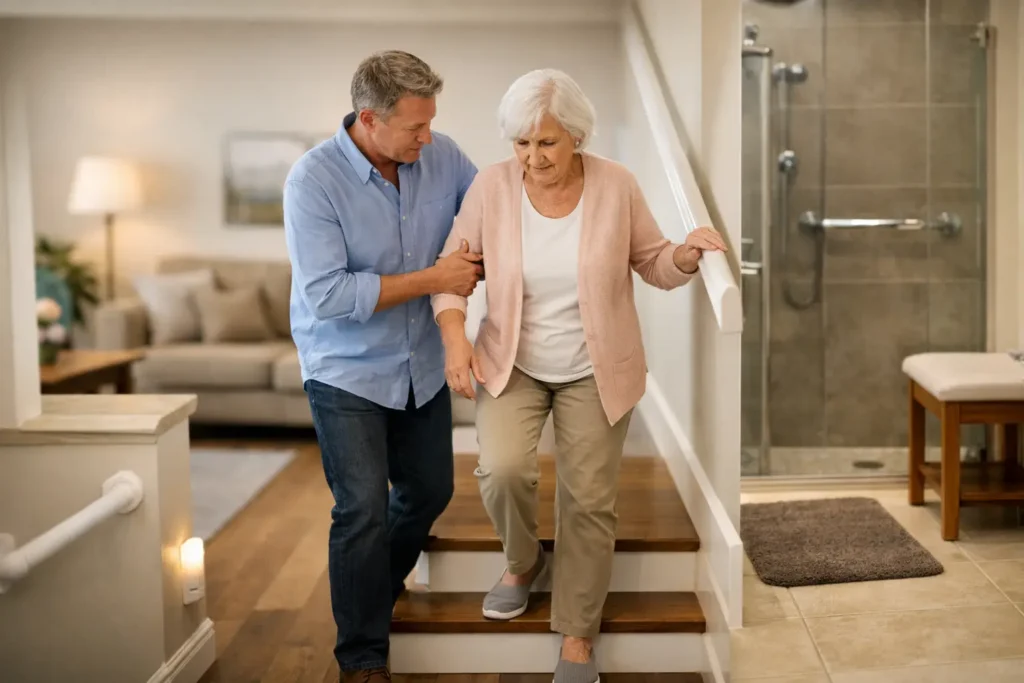
A fall can change more than a loved one’s mobility. It can make everyday routines feel uncertain, leave family members worried between visits, and cause an older adult to pull back from the activities that give life meaning. The most effective senior fall prevention tips are not about taking away independence. They are about making independence safer, more supported, and easier to sustain.
Falls rarely have one single cause. A loose rug may contribute, but so can poor lighting, a new medication, dehydration, vision changes, muscle weakness, or the decision to hurry to the bathroom without asking for help. Looking at the whole picture helps families make thoughtful changes before an accident happens.
Start With the Places Where Falls Happen Most
Walk through the home as if you were seeing it for the first time. Pay attention to the route from the bedroom to the bathroom, the path to the kitchen, entryways, staircases, and outdoor walkways. A home can feel familiar to the person who has lived there for decades while still becoming harder to navigate as balance, strength, or vision changes.
Clear walkways should be wide enough for a walker or cane, with cords, low furniture, pet toys, baskets, and stacks of mail moved out of the way. Rugs deserve special attention. A rug with curled corners or no non-slip backing can be more hazardous than helpful. In many cases, removing a throw rug is the simplest choice.
Lighting matters just as much. Add bright, easy-to-reach lights near beds, in hallways, and by every staircase. Motion-sensor nightlights can be especially helpful for someone who gets up during the night. Light switches should be easy to find before entering a dark room, not across the room after someone has already started walking.
Senior Fall Prevention Tips for the Bathroom
Bathrooms combine hard surfaces, water, turning, and quick changes in position. They deserve practical safety updates, even when a loved one seems steady most of the time.
Install securely anchored grab bars near the toilet and inside the shower or tub. Towel bars are not designed to hold a person’s weight and should never be used as a substitute. A non-slip bath mat, shower chair, and handheld shower head can reduce the need to stand or twist while bathing.
Consider whether the toilet is the right height. A raised toilet seat may make standing easier for someone with knee, hip, or balance limitations. Keep frequently used toiletries within easy reach so there is no need to bend deeply, stretch overhead, or step onto a stool.
If a loved one is having more urgent or frequent bathroom needs, do not dismiss it as an inconvenience. Rushing is a common reason for falls. A bedside commode, a clearer route to the bathroom, or more regular caregiver check-ins may offer meaningful protection while preserving privacy and dignity.
Support Strength, Balance, and Safe Movement
A safer home is only part of fall prevention. Muscles, balance, and confidence also affect how securely a person moves through daily life. After a fall or a period of illness, many older adults understandably become cautious. But avoiding movement altogether can lead to more weakness and a higher risk of another fall.
Encourage activity that fits the person’s health, mobility, and medical guidance. Walking, gentle chair exercises, supervised balance work, or a physical therapy program may help build strength over time. The best approach depends on the individual. Someone recovering from surgery, living with arthritis, or experiencing dementia may need a more structured routine and closer supervision.
Proper footwear is a small detail with a large impact. Shoes should have supportive soles, secure backs, and a fit that does not pinch or slide. Slippers without traction, socks on smooth floors, and loose sandals can make a steady person unexpectedly unsteady. Encourage shoes indoors when floors are slick or when a loved one needs extra support.
Canes and walkers should be sized and used correctly. An assistive device that is too tall, too short, or left in another room offers little protection. If your loved one resists using one, ask what is behind that resistance. They may feel embarrassed, uncomfortable, or unsure how to use it. A respectful conversation and instruction from a care professional can help the device feel like a tool for freedom rather than a limitation.
Review Health Changes That Can Raise Fall Risk
Families often notice the environmental risks first, but physical changes may be the earliest warning signs. Dizziness when standing, new fatigue, shuffling steps, difficulty rising from a chair, blurred vision, or a recent near-fall all deserve attention.
Medication routines are particularly important. Some prescriptions and over-the-counter products can cause drowsiness, dizziness, or changes in blood pressure. Rather than stopping anything on your own, bring concerns to the prescribing clinician or pharmacist and ask for a medication review. This is especially valuable after a new prescription, dose change, illness, or hospital stay.
Dehydration can also contribute to weakness and lightheadedness, particularly in Florida’s warm climate. Offer fluids throughout the day when appropriate for your loved one’s care plan, and pay attention to changes in appetite or eating habits. Consistent meals and nutrition support energy, muscle health, and steadier movement.
Vision and hearing should not be overlooked. Updated glasses, regular eye exams, and adequate hearing support can help an older adult recognize steps, edges, obstacles, and approaching people. Even a small change in depth perception can make stairs and curbs more difficult to judge.
Create a Plan for High-Risk Moments
Falls are more likely when a person is tired, distracted, rushing, or trying to manage a task that has become too difficult alone. Talk openly about the moments that feel least secure. That might be showering, getting dressed, transferring in and out of bed, carrying laundry, taking out the trash, or walking outside after rain.
A simple plan can reduce pressure in those moments. Keep a phone or call device within reach, schedule regular check-ins, and make it clear that asking for help is a wise choice, not a burden. If a loved one has memory loss, visual reminders and a consistent daily routine can be helpful, though supervision may be necessary when judgment or awareness of hazards has changed.
For families, this conversation can be emotional. An older parent may insist they are fine, while an adult child sees near-misses and growing risks. Try to focus on shared goals: staying active, remaining comfortable, and avoiding an injury that could lead to greater restrictions later. Respectful language often goes further than trying to win an argument.
When More Daily Support May Be the Safer Choice
Home modifications can make a significant difference, but they cannot solve every situation. It may be time to consider additional support when falls or near-falls are recurring, medications are being missed, nighttime needs are increasing, mobility requires hands-on help, or a family caregiver is becoming exhausted.
Assisted living can provide structured routines, medication management, nourishing meals, and trained caregivers who are available to help with daily activities. For a person living with Alzheimer’s disease or another form of dementia, specialized memory care may also offer the supervision and familiar routine needed to reduce wandering, unsafe transfers, and other fall risks.
The right setting is not about giving up independence. It is about matching care to the support a person needs now, with room for those needs to change. At Aliviya Rose Manor, families can discuss a loved one’s routines, mobility, and safety concerns in a warm, home-like environment designed around personal attention.
If your loved one has fallen, come close to falling, or no longer feels secure moving through the day, trust that concern. A few careful adjustments and the right level of support can help them keep doing what matters most with greater confidence and dignity.