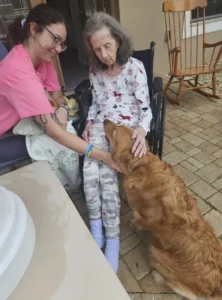



The call often comes after a small moment that does not feel small at all: a missed medication, a stove left on, a fall, or a parent who insists everything is fine while clearly needing more help. In those moments, caregiver support is not about giving up responsibility for someone you love. It is about making sure no one has to carry that responsibility alone.
Family caregivers do extraordinary work. They manage appointments, meals, medications, personal care, transportation, finances, and the emotional weight of watching a loved one change. Many do this while working, raising children, or managing their own health. Over time, even the most devoted caregiver can become exhausted, worried, and isolated.
The right support can protect an older adult’s comfort and independence while helping the whole family find steadier ground.
What Caregiver Support Really Means
Caregiver support can look different for every family. For one person, it may mean having a trusted professional check in during the week. For another, it may mean a short respite stay while a spouse recovers from surgery or takes a needed break. When a loved one has dementia or Alzheimer’s disease, support may also include a structured environment, trained caregivers, and routines designed to reduce confusion and distress.
The goal is not to replace family involvement. A caring senior living community should make it easier for families to remain present as a daughter, son, spouse, sibling, or friend, rather than feeling they must become a full-time care coordinator, medication manager, and overnight safety monitor all at once.
Good support brings practical help, but it also brings reassurance. Families deserve to know their loved one is eating well, receiving medications as directed, getting assistance with daily tasks, and being treated with patience and respect.
Signs Your Family May Need More Help
Many families wait for a crisis before seeking additional care. That is understandable. Change can feel frightening, and an older adult may worry that asking for help means losing control. Still, acting earlier often gives everyone more choices and time to adjust.
Pay attention when daily routines are becoming difficult to maintain. A loved one may be forgetting medications, losing weight, withdrawing from favorite activities, having trouble bathing or dressing, or becoming unsteady when walking. A home that was once tidy may become harder to manage. Bills may go unpaid, meals may be skipped, or phone calls may go unanswered.
The caregiver’s well-being matters just as much. Constant worry, poor sleep, resentment, missed work, anxiety, and declining health are not signs of failure. They are signs that the care situation may no longer be sustainable without more support.
Memory changes deserve particular attention. Repeating questions, getting lost in familiar places, nighttime wakefulness, suspiciousness, and changes in judgment can create safety concerns that families cannot always manage alone. Specialized memory care can provide consistency and meaningful engagement while helping preserve a person’s dignity.
The Benefits of Sharing the Care
Bringing in support does not make a family less close. In many cases, it improves relationships. When the pressure of every task no longer falls on one person, visits can become warmer and more meaningful. A spouse may have the energy to enjoy conversation again. An adult child may be able to listen without rushing through a long checklist of chores.
Professional support also adds structure. Trained caregivers can help with personal care, mobility, meals, hydration, medication routines, and observation of changes that families may not notice right away. In a residential assisted living setting, residents also benefit from companionship, familiar routines, and a home-like atmosphere that can feel less overwhelming than a large, institutional environment.
There are trade-offs, and the right choice depends on your loved one’s needs. Remaining at home may work well when assistance is limited and dependable help is available. A residential community may be a better fit when care needs are increasing, safety risks are growing, or the family needs around-the-clock peace of mind. The best decision is the one that supports both the older adult and the people who love them.
How to Start the Conversation With a Loved One
Conversations about care are rarely easy, especially when a parent or spouse values independence. Start with respect rather than a list of concerns. Choose a calm time, avoid speaking after an upsetting incident, and focus on what would make daily life easier and safer.
Instead of saying, “You cannot live alone anymore,” try asking, “What parts of the day feel harder than they used to?” You might ask whether help with meals, housekeeping, medication reminders, or transportation would make life more comfortable. Listening matters. Your loved one may have fears about leaving home, losing privacy, or becoming a burden. Those concerns deserve a gentle, honest response.
It can also help to frame care as a way to protect independence, not take it away. With the right level of assistance, many older adults are able to spend less energy on difficult tasks and more time enjoying familiar interests, relationships, and daily comforts.
If the conversation becomes emotional, pause and return to it later. A single discussion does not have to settle every detail. What matters is creating a path toward support before an emergency forces the decision.
Questions to Ask When Evaluating Caregiver Support
Whether you are considering in-home help, adult day services, respite care, or a residential community, ask direct questions about the experience your loved one will have each day. You want to understand not only what services are offered, but how care is delivered.
Ask how the team learns a resident’s routines, preferences, health needs, and personality. Find out who helps with medications, how meals are planned, what happens if a resident’s needs change, and how families are kept informed. If memory care is needed, ask about staff training, daily structure, supervision, and how the team responds to confusion or distress.
A visit can tell you a great deal. Notice whether the setting feels calm, clean, and lived in. Observe how caregivers speak to residents. Are people addressed with warmth? Do staff members seem to know residents personally? Does the environment feel like a place where your loved one could be seen as an individual, not simply a care task?
Trust your instincts, but also look for clear systems. Compassion and professionalism should work together. Families should feel welcomed into the care-planning process and confident that there is a thoughtful plan for both everyday needs and unexpected changes.
Respite Care Is Support Before You Reach a Breaking Point
Respite care is sometimes misunderstood as something families use only when they are overwhelmed. It can be that, and there is no shame in needing relief. But it can also be a proactive option when a caregiver needs to travel, attend to personal health, recover after a procedure, or simply rest.
A short-term stay gives an older adult the opportunity to receive attentive care, nutritious meals, medication support, and social connection in a secure setting. It also gives families a chance to see how their loved one responds to additional care without making an immediate long-term decision.
For some families, respite becomes a helpful bridge. It offers time to evaluate what level of support will be needed next and makes future transitions feel more familiar.
A Home-Like Setting Can Change the Experience
For older adults who need daily assistance, the environment matters. Smaller residential communities can offer a more personal rhythm, where caregivers have the opportunity to know each resident’s habits, favorite foods, comfort needs, and life story. That kind of attention can be especially meaningful for someone living with memory loss.
At Aliviya Rose Manor, families can find personalized assisted living, memory care, respite care, medication management, and nutrition support in a warm residential setting. The community’s commitment to compassionate, family-centered care has been recognized with nine Hernando Sun Readers’ Choice awards across three years, including Gold awards in 2026 for Best Assisted Living Facility, Best Memory Care Community, and Best Senior Living Community.
Recognition matters because it reflects trust, but the most meaningful measure is more personal: whether a family feels heard, whether a resident feels safe, and whether care is delivered with dignity each day.
Give Yourself Permission to Ask for Help
Caregiving is an act of love, but love does not require you to do everything alone. Asking for support can be one of the most protective choices you make for your loved one and for yourself.
Begin with one honest conversation, one assessment, or one visit. The next right step may be smaller than you think, and it can make room for more rest, more confidence, and more meaningful time together.