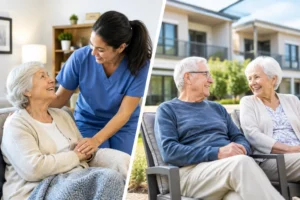



Caring for a parent with dementia is heavy—and deeply personal
When a parent is living with dementia or Alzheimer’s, families are often carrying more than logistics. They are carrying grief, uncertainty, second-guessing, and the quiet fear of whether anyone else will understand the person their loved one still is beneath the changes dementia brings.
For many adult children, the search for memory care begins during a crisis. A hospitalization, increased confusion, wandering, resistance to care, or a sudden decline can force important decisions to happen fast. In those moments, families do not just need a place for Mom or Dad to stay. They need guidance, reassurance, and a team they can trust.
At Aliviya Rose Manor in Spring Hill, Florida, families find a boutique memory care home built around genuine expertise and heartfelt compassion. Aliviya Rose Manor is a small, residential, 8-bed assisted living and memory care home, positioned as a highly personalized alternative to larger corporate settings, with Wendy’s PAC credentials identified as a major differentiator in the site’s SEO strategy and trust positioning. That difference matters, especially in dementia care, where a calm voice, the right approach, and deep training can change the entire feel of a resident’s day.
What is the Positive Approach to Care?
At Aliviya Rose Manor, dementia care is guided by Teepa Snow’s Positive Approach to Care, often called PAC. PAC is a dementia care method built around understanding brain change, supporting remaining abilities, and adapting care so that interactions feel respectful, positive, and less distressing for the person living with dementia. In simple terms, PAC teaches caregivers to stop focusing only on what dementia has taken away. Instead, it asks a better question: what abilities are still here, and how can care be shaped around them? That shift changes everything. It reduces frustration, strengthens connection, and helps residents feel seen rather than managed.
This is a relationship-first philosophy. Instead of rushing, correcting, or confronting, PAC emphasizes connection, visual approach, supportive touch techniques, and communication that works with the person’s changing brain rather than against it. For families, that means care that feels more dignified, more peaceful, and more human.
Meet Wendy Schabilion: the heart and expertise behind Aliviya Rose Manor
What makes Aliviya Rose Manor especially unique is that this philosophy is not simply borrowed from a training manual. It is lived out daily under the guidance of Wendy Schabilion, a PAC Certified Independent Trainer, published author, and former hospice nurse whose professional journey was shaped by seeing firsthand how many families struggle to find truly knowledgeable dementia care.
According to public reporting, Wendy’s background includes hospice nursing and more than 14 years of hands-on experience in memory care and senior care decision-making. That journey matters. Hospice work gives a caregiver a rare depth of understanding around dignity, decline, comfort, family stress, and the emotional realities that come with later stages of life. It also sharpens the ability to notice what families often miss when they are overwhelmed and trying to make the best possible choice under pressure.
Wendy founded Aliviya Rose Manor in 2022 after seeing the need for better, more personal senior care in Spring Hill. On her public profile, she explains that she started the home after working as a hospice nurse and wanting to deliver the kind of care, love, and respect seniors deserve. That origin story gives Aliviya Rose Manor something many facilities cannot claim: its standards were built from lived clinical experience, not from a corporate template.
Wendy has also translated that experience into practical guidance for families through her books. Her first title, Solving The Senior Housing Puzzle: Family Guide to Choosing the Right Options for Mom or Dad, helps families understand the range of senior housing options and how to think through them clearly. Her second book, The Ultimate Guide to Choose the Best Assisted Living for Your Loved One, focuses specifically on the assisted living selection process, including questions to ask, red flags to spot, and criteria most families do not know to look for.
Those details do more than strengthen credentials. They show that Wendy’s expertise is active, practical, and centered on helping families make wise, compassionate decisions. At Aliviya Rose Manor, she brings that same perspective into staff training, mentoring caregivers so that the PAC philosophy is not just discussed, but consistently practiced in the daily rhythm of the home.
The dementia expertise gap: why specialized knowledge matters
One of the biggest challenges families face is something that often goes unspoken: the dementia expertise gap. Many websites mention memory care, but far fewer explain the training, philosophy, and day-to-day skill required to truly care well for someone living with dementia. The attached SEO proposal specifically identified this as a major content weakness, noting that despite Wendy being a PAC Certified Independent Trainer and published author, the website lacked deep educational content explaining that expertise clearly.
This gap matters because dementia care is not the same as general assisted living. A caregiver may be warm and well-intentioned, but without dementia-specific training, everyday moments can become more confusing or upsetting for the resident. Research on dementia education in memory care settings has found that staff training improves knowledge and supports better care responses, while inadequate training can limit staff ability to understand behaviors and meet residents’ needs effectively.
Specialized expertise helps caregivers understand that behavior is communication. Repetition, withdrawal, agitation, refusing care, or restlessness are often signs of fear, confusion, overstimulation, pain, or unmet needs—not simply “difficult behavior.” PAC helps staff respond with skill, gentleness, and respect so the resident feels safer and more successful.
That is why expertise cannot be an afterthought. In memory care, it shapes whether a resident feels calm or constantly corrected, connected or isolated, secure or unsettled. At Aliviya Rose Manor, Wendy’s role as an in-house PAC trainer helps close that expertise gap inside the home by equipping staff with a deeper framework for communication, support, and meaningful engagement.
Why families in Spring Hill choose a boutique memory care home
Families searching for memory care in Spring Hill are often comparing large facilities with smaller residential homes. Aliviya Rose Manor’s positioning as a boutique, 8-bed home is one of its strongest differentiators because smaller settings can support more individualized attention, more familiar routines, and stronger daily relationships between residents and caregivers.
In a smaller home, staff have more opportunity to notice subtle changes, learn a resident’s preferences, and adapt care in ways that feel personal rather than institutional. That environment fits naturally with PAC, which depends on knowing the individual—not just their diagnosis, but their habits, strengths, history, and emotional needs.
For families, this often creates a very different experience. Instead of wondering whether their parent will be “one of many,” they can feel confident their loved one is being cared for by a team that knows who they are and is trained to approach dementia with both skill and compassion.
You Don’t Have to Navigate This Journey Alone
If your family is facing the painful and urgent search for dementia care, Aliviya Rose Manor offers something rare: a warm, intimate home in Spring Hill guided by genuine dementia expertise. Here, care is shaped by Teepa Snow’s Positive Approach to Care, strengthened by Wendy Schabilion’s clinical background, informed by her published work for families, and lived out daily by a team trained to honor the person behind the diagnosis.
Schedule a tour of Aliviya Rose Manor to meet Wendy, experience the home for yourself, and see what compassionate, expert-led memory care can look like in real life.