


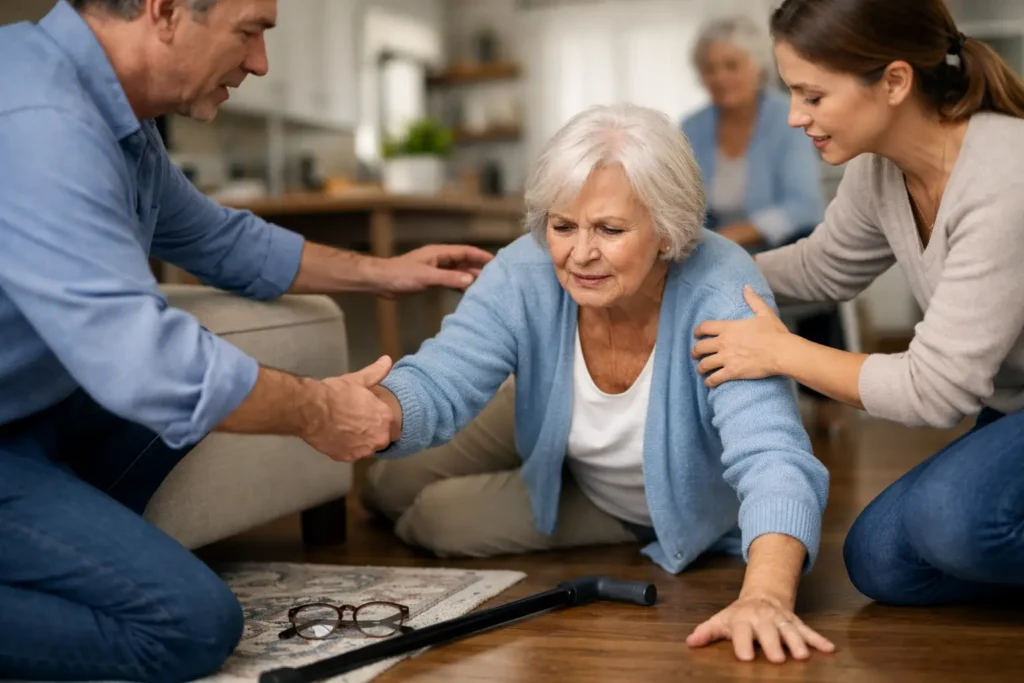
A fall can change a family’s routine in a single afternoon. A loved one who once moved confidently through the house may suddenly be afraid to shower alone, walk to the mailbox, or get up at night. Understanding senior fall risk factors helps families notice smaller changes early, before a frightening incident becomes a loss of confidence or independence.
Falls are rarely caused by one issue alone. More often, they happen when several factors overlap: a new prescription, weaker legs after an illness, dim lighting in the hallway, or a moment of confusion while rushing to the bathroom. Looking at the full picture allows families to respond with compassion, practical support, and a plan that respects their loved one’s dignity.
Why senior fall risk factors can change quickly
A person’s fall risk is not fixed. Someone may have managed well at home for years, then become less steady after a hospitalization, a change in vision, dehydration, grief, or a medication adjustment. This is why a recent near-fall deserves attention, even if no injury occurred.
Families sometimes hear, “I’m fine,” from a loved one who is trying hard to maintain privacy and independence. That feeling is understandable. Yet repeated stumbles, unexplained bruises, furniture being used for balance, or a growing reluctance to leave the house can be meaningful signs that more support is needed.
The goal is not to take control away. It is to make daily life safer so an older adult can continue doing as much as possible with confidence.
Physical changes that affect balance and mobility
Strength, balance, and reaction time naturally change with age, but the pace of change varies from person to person. Weakness in the legs or core can make it difficult to rise from a chair, step over a threshold, or recover after a small misstep. Arthritis, foot pain, numbness, and joint stiffness can also alter the way someone walks.
A slower gait is not automatically a warning sign. However, shuffling, holding onto counters, taking unusually small steps, or struggling to turn can point to a higher risk of falling. So can dizziness when standing, shortness of breath with normal activity, or fatigue that makes a loved one less steady later in the day.
Footwear deserves a closer look as well. Loose slippers, worn soles, shoes without secure backs, and socks on smooth floors can create an avoidable hazard. A comfortable, supportive shoe is often safer than a favorite pair that no longer fits properly.
Medication routines and health changes
Medication management is an essential part of fall prevention. Some prescriptions and over-the-counter products may cause drowsiness, dizziness, low blood pressure, blurred vision, or confusion. The concern can be greater when several medications are taken together, when doses are missed and then doubled, or when a new medication has recently been added.
Families should encourage a medication review with the loved one’s health care provider or pharmacist, especially after a fall, a near-fall, or a noticeable change in alertness. Do not stop or change a prescription without professional guidance. The purpose of a review is to understand possible side effects and make sure the routine is clear and consistent.
Illness can also raise risk. Urinary tract infections, dehydration, poor nutrition, sleep problems, and recovery from a hospital stay may leave an older adult suddenly weaker or more confused than usual. What looks like simple clumsiness may be a sign that the body needs attention.
Vision, hearing, and memory-related concerns
Clear vision helps the brain judge depth, distance, steps, and changes in flooring. Cataracts, glaucoma, poor lighting, and an outdated prescription can make a familiar room harder to navigate. Bifocals may be useful for reading, but some people find them challenging when looking down at stairs or curbs. Regular vision care and bright, even lighting can make a meaningful difference.
Hearing matters, too. When a person cannot easily hear a caregiver’s reminder, a phone ringing, or activity around them, they may become startled or distracted while moving. Hearing changes can also affect awareness of the surrounding environment.
For a loved one living with Alzheimer’s disease or another form of dementia, fall prevention requires even more individualized attention. Confusion about time of day, difficulty recognizing a bathroom, wandering, poor judgment, and agitation can all affect safety. A person may forget to use a walker, stand up without waiting for help, or become disoriented in a dim room.
In these moments, a calm routine is often more helpful than repeated correction. Familiar surroundings, clear pathways, gentle reminders, and caregivers who understand the person’s habits can reduce stress while supporting safer movement.
Home hazards that can quietly add up
Most homes contain small hazards that are easy to overlook until balance becomes less reliable. A single curled rug corner or dark hallway may not seem serious, but it can be enough to cause a fall when combined with fatigue or poor vision.
Walk through the home at the time of day your loved one is most active, including after dark. Pay special attention to the route between the bed and bathroom, the front entry, the kitchen, and any outdoor steps. Consider whether the person can reach lights easily, whether cords cross walkways, and whether chairs or tables narrow the path.
Common improvements include removing loose rugs, securing cords, adding handrails where needed, placing non-slip surfaces in bathing areas, and using nightlights in bedrooms and hallways. Grab bars should be professionally installed rather than relying on towel bars or suction devices that may not hold a person’s weight.
Bathroom routines deserve particular care. Stepping in and out of a tub, bending to dry off, and rushing to the toilet at night are common moments for falls. A shower chair, raised toilet seat, or supervised bathing routine may be appropriate depending on the person’s mobility and comfort level.
When a near-fall should lead to a bigger conversation
A near-fall is not something families need to dismiss. It can reveal that a loved one is compensating in ways that are becoming harder to sustain. Pay attention if falls or stumbles happen more than once, occur at night, happen after medications, or involve confusion about where to go.
It is also wise to seek prompt medical guidance after a fall, particularly if there is head impact, severe pain, new weakness, fainting, unusual sleepiness, or a sudden change in thinking or speech. Even when an older adult says they feel fine, some injuries are not immediately obvious.
Beyond the immediate medical question, families can ask a caring, practical question: what is making daily life harder right now? The answer may be as simple as better lighting and a medication review. In other situations, it may reveal that living alone no longer provides the steady support a loved one needs.
Building a safer daily routine with support
Fall prevention works best when it becomes part of everyday care rather than a list of rules. Consistent meals and hydration can help support energy and steadiness. Regular movement suited to the person’s abilities can preserve strength. A predictable schedule can reduce rushing, especially around bathing, dressing, and bedtime.
For families, the challenge is often knowing how much help is enough. Occasional check-ins may work well for a parent who needs reminders but remains steady and oriented. More frequent hands-on support may be safer for someone with memory loss, medication concerns, nighttime confusion, or repeated balance problems. It depends on the pattern of needs, not just one difficult day.
A residential assisted living setting can offer reassurance when home safety has become a daily worry. At Aliviya Rose Manor, personalized support can include assistance with daily routines, medication management, nutrition support, and structured memory care in a home-like environment. The right care plan should support independence where possible while ensuring someone is nearby when help is needed.
A thoughtful conversation today can spare your family from making rushed decisions after a fall. Start with kindness, listen closely to what your loved one is experiencing, and choose support that helps them feel safe, capable, and cared for each day.