

A familiar song can bring back a smile when a direct question cannot. A basket of clean towels to fold can restore a sense of purpose. For families searching for the best activities for memory loss, these small moments matter because they meet a loved one where they are – with comfort, dignity, and no pressure to perform.
The goal is not to test memory or force someone to remember details they cannot access. Meaningful activities can support connection, encourage gentle movement, ease restlessness, and make the day feel more predictable. The right choice depends on the person’s abilities, interests, energy level, and stage of memory loss.
What Makes an Activity Helpful for Memory Loss?
An activity is most successful when it feels familiar, simple, and achievable. Someone living with dementia may no longer enjoy a complex card game but may happily sort a deck by color, water a plant, or listen to music from their younger years. A task that takes only a few minutes can be just as valuable as one that fills an afternoon.
Try to offer one step at a time. Instead of saying, “Let’s make cookies,” place a bowl on the table and ask, “Would you help me stir?” Keep the setting calm, reduce background noise, and avoid correcting every mistake. If an activity causes frustration, it is okay to stop and try something else later.
Safety is part of the plan as well. Choose supplies that are easy to handle, supervise activities involving heat or sharp objects, and consider mobility, vision, and hearing needs. A physician or care professional can offer guidance when there are changes in balance, behavior, or ability.
10 Best Activities for Memory Loss
1. Listen to familiar music
Music often reaches people in a deeply personal way. Create a playlist of songs your loved one enjoyed as a teenager, young adult, or parent. They may tap a foot, sing along, recall a lyric, or simply relax while listening.
Keep the volume comfortable and watch their response. Some people enjoy lively big-band music in the morning, while softer hymns, jazz, or instrumental music may be more soothing later in the day.
2. Look through photos and keepsakes
A photo album, postcard collection, military memento, recipe card, or favorite holiday decoration can invite warm conversation. There is no need to ask, “Do you remember this?” which can feel like a test. Instead, use gentle observations such as, “This looks like a happy day,” or “Tell me what you notice in this picture.”
If a person mixes up names or dates, follow the feeling rather than correcting the facts. The comfort of remembering a beloved place or person is more valuable than getting every detail right.
3. Fold laundry or sort household items
Purposeful household tasks can be especially calming for people who spent years caring for a home or family. Folding washcloths, matching socks, sorting large buttons by color, or arranging plastic containers can provide satisfying repetition without requiring complex decisions.
Use familiar, safe items and offer praise for participation, not perfection. The task should feel like a contribution, never like busywork.
4. Spend time in the garden
Florida’s warm climate can make brief outdoor time especially enjoyable when the weather allows. Watering plants, feeling the texture of leaves, arranging flowers, or sitting near a bird feeder engages the senses and offers a change of scenery.
For a person with limited mobility, bring the experience closer with potted herbs, a small container garden, or fresh flowers at the table. Always provide shade, hydration, and supervision outdoors, particularly during hot weather.
5. Create simple art
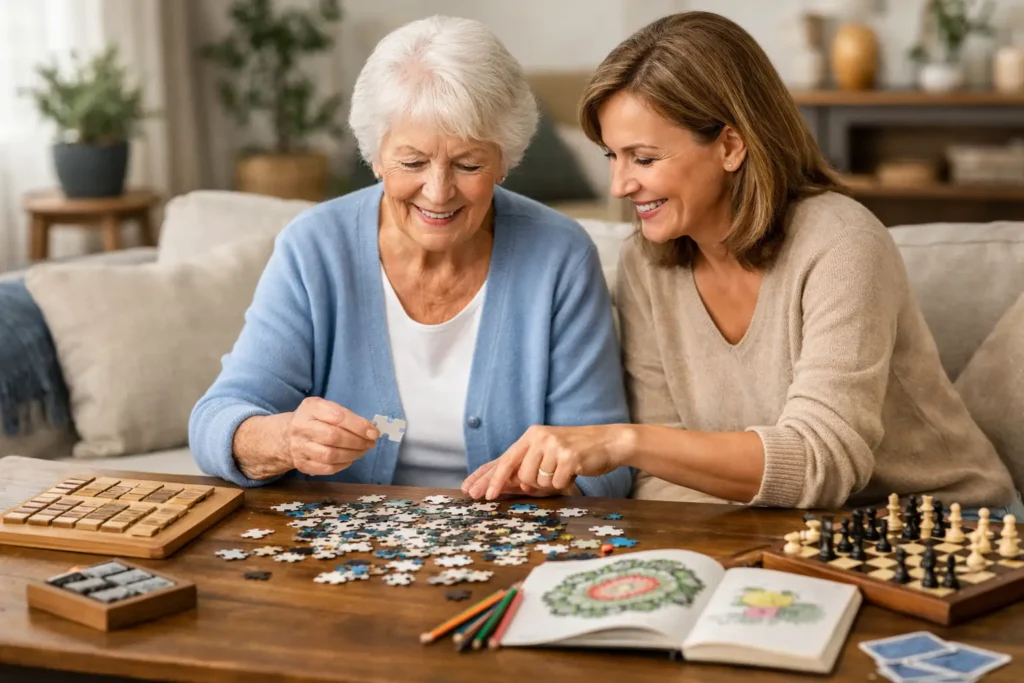
Art gives people a way to express themselves without needing the right words. Large crayons, washable markers, watercolor paints, collage materials, or adult coloring pages can work well. Choose projects with an open-ended result rather than instructions that must be followed exactly.
It helps to prepare materials before inviting your loved one to join. A clean workspace, two or three color choices, and an encouraging tone make participation easier. Displaying finished artwork can reinforce pride and belonging.
6. Enjoy gentle movement
Movement can lift the mood, release tension, and support everyday mobility. Depending on the person’s health and comfort, this may mean a short walk, seated stretches, chair exercises, dancing to a favorite song, or gently tossing a soft ball back and forth.
Keep the activity short and pleasant. A five-minute walk to look at flowers may be more successful than a longer exercise session. Stop if your loved one seems dizzy, short of breath, fatigued, or unsteady.
7. Prepare a familiar snack together
Food can bring comfort through smell, taste, and routine. Stirring pudding, spreading soft cheese on crackers, washing fruit, or arranging sandwiches can offer a manageable way to participate in meal preparation. Familiar recipes may also encourage conversation about family traditions.
Match the task to the person’s abilities and dietary needs. If swallowing is difficult or there are nutrition restrictions, ask the care team which foods and textures are appropriate.
8. Read aloud or share short stories
Reading aloud can be a peaceful shared activity, even when a loved one is unable to follow every word. Try a short devotional, a local newspaper feature, poetry, a favorite children’s book, or a simple story with clear language. The rhythm of a familiar voice is often as comforting as the content itself.
Avoid quizzing them afterward. A simple comment such as, “I liked that part about the dog,” can be enough to create connection.
9. Do a sensory activity
Memory loss can make the world feel confusing, but pleasant sensory experiences can help a person feel grounded. Offer a soft blanket, a textured fidget item, a lavender-scented sachet, a bowl of smooth shells, or a hand massage with an unscented lotion if they enjoy touch.
Pay attention to preferences. Some people find scent, touch, or sound soothing; others can become overwhelmed. Start with one sensory element at a time and let their reaction guide you.
10. Invite simple companionship
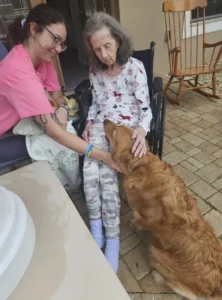
Not every meaningful activity needs a product or a plan. Sitting together on the porch, watching birds, sharing a cup of tea, brushing a pet, or holding hands during a quiet television program can reduce loneliness and reassure a loved one that they are safe.
For someone experiencing confusion, a calm presence can be more helpful than conversation. Speak slowly, make eye contact, and allow comfortable pauses. Connection does not always require words.
How to Build a Daily Rhythm Without Overdoing It
A predictable rhythm can make the day feel less stressful. Many families find that mornings are best for activities requiring more attention, such as a walk, a simple household task, or looking through photos. Afternoons may call for music, art, or quiet time, especially if fatigue or late-day confusion is common.
Offer choices, but keep them limited. “Would you like to listen to music or help fold towels?” is easier to answer than, “What do you want to do today?” If your loved one declines, do not take it as a failure. Hunger, pain, poor sleep, overstimulation, or a change in routine can affect interest from one day to the next.
It can also help to notice patterns. Write down what brings calm, what causes frustration, and what time of day your loved one seems most engaged. These observations are useful for family caregivers and for professional care teams creating a personalized routine.
When More Support Can Bring Relief
Keeping a loved one engaged at home can be rewarding, but it can also become difficult when memory loss affects safety, medication routines, meals, sleep, or personal care. Family caregivers deserve support too. Respite care, structured daily activities, and specialized memory care can provide consistency while giving families room to rest and be present as family.
At Aliviya Rose Manor, meaningful activities are approached as part of personal, respectful care – not as a one-size-fits-all schedule. The most comforting moments often begin by learning a resident’s life story, favorite routines, and the small things that make them feel at home.
Start with what your loved one has always enjoyed, keep expectations gentle, and let their response lead the way. A peaceful song, a familiar task, or a few quiet minutes together may become the bright spot in both of your days.